

Getting Incentives Right
by Derek Gurney In September 2010, a natural gas pipeline owned by Pacific Gas & Electric company (PG&E) ruptured in a subdivision of San Bruno, California, starting a fire that killed eight people, destroyed 53 homes, and damaged 120 more. Because San Bruno is only a few miles from the Aplia offices, I took particular notice when I saw the following headline in the San Francisco Chronicle: “PG&E incentive system blamed for leak oversights.”
According to the Chronicle article, PG&E had delegated leak survey crews to find leaks on its pipelines but had been paying bonuses to “supervisors whose leak survey crews found fewer leaks and kept repair costs down.” Two years before the fire, PG&E ended the policy of bonuses and, worried about the consequences of the bonus system, began to redo leak surveys. The subsequent surveys revealed “many more” leaks than had originally been reported.
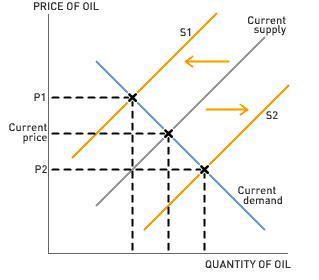
This result doesn’t come as a surprise if we think about a supply curve for undiscovered leaks -- leaks that exist but are not discovered by the survey crew. While it may at first take some mental gymnastics to think about undiscovered leaks being “supplied,” when you contemplate how the bonus system would effect the effort and diligence of leak survey crews, you can easily imagine the usual upward sloping supply curve like the one on the graph:

As with any upward sloping supply curve, the more that is paid for undiscovered leaks, the more “undiscovered” leaks will be supplied. Equivalently, fewer “discovered” leaks will be supplied.
(Note: The analysis doesn’t rely on the definition of the quantity supplied used here. A similar analysis based on the supply of discovered leaks, which may be easier to think about, leads to the same upward sloping supply curve. The difference is that the bonus system makes the payment for discovering a leak negative, and to account for this, the supply curve has to start at a price below zero (that is, even at a price of zero, there would be leaks discovered, so the price at which no leaks would be discovered would be below zero.)
This analysis doesn’t mean that incentive-based pay is a bad idea. It would make sense to pay to anyone responsible for preventing leaks a bonus based on fewer discovered leaks (assuming that the people in charge of discovering are different from the people in charge of preventing). What this analysis does mean, though, is that you have to match the incentives to the result you want. The price of mismatching incentives is, in some cases, very high.
Discussion questions:
1. Think of an incentive system that would have resulted in fewer leaks going undiscovered. What would be some of the drawbacks of this incentive system, particularly in terms of cost?
2. In the United States, students take standardized tests at various points in their academic career, and in some states, their teachers face dismissal if their students perform poorly on the exams. In those states there have also been reports of teachers fixing their students answers on the tests, and complaints that teachers focus on “teaching to the test,” to the exclusion of skills that cannot be tested. How are the incentives faced by teachers like the incentives faced by PG&E’s leak survey crews? How are they different?
3. What other situations do you know of where an incentive system produces undesirable results? Would the results improve more by changing the incentives or by removing the incentive system altogether?
Labels: Incentives
2:56 PM | Permalink | Comments |
Assign Aplia Reading


 Over his NHL career, Hall of Fame defenseman Larry Murphy was praised for his reliable defense, gifted offense, and his immense hockey skill. But until now, I doubt he has been lauded for his economic insight. Perhaps even Murphy is unaware that his recent comments about head injuries in the NHL perfectly illustrate a real-world example of moral hazard.
  As a frequent Southwest passenger, paying for checked baggage is not quite commonplace for me yet, since Southwest is a firm proponent of bags flying free. As any traveler is well aware, many airlines now charge an additional fee for checking baggage, averaging roughly $20 per bag. However, I was initially surprised when I recently checked in online for my
  With significant contributions and analysis from Kasie R. Jean.





 In an important scene from the 1999 movie American Beauty, two characters—Jane and Ricky—watch






 Subscribe to this blog